Grown-Up Goals. Kid-Sized Joy.
Learning in disguise.
Setting Up a Grocery Store Dramatic Play Center for Preschool
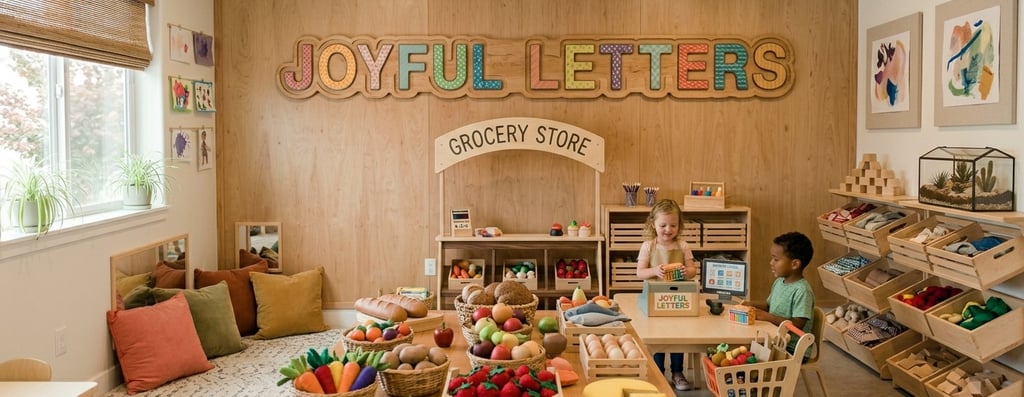
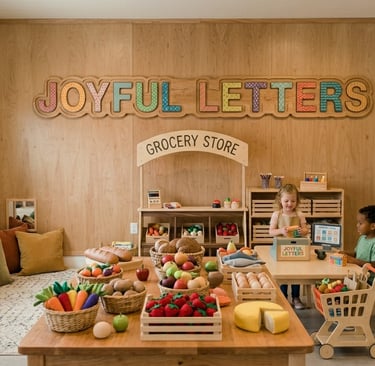
This center is designed to help children develop their social, emotional, and cognitive skills through play. It provides a fun and engaging environment for children to learn about shopping, money, and healthy eating.
We include links to Amazon and other companies on our pages. We might receive a small commission on your purchases, but this will not increase your cost. This helps us provide informative and creative ideas for you on this site.
Items:
Play food: fruits, vegetables, meat, dairy, and packaged goods
Eco-Friendly Stock: Invite children to bring in clean, empty recycling from home. Stocking the shelves with "real" boxes and bottles is a high-engagement, zero-cost way to build your center.
The Giving Store: Use a classroom food drive to supply your center. Students can practice shopping with real canned goods before the items are ultimately donated to a local charity.
Quality Investments: For a permanent collection, look for durable sets like from Melissa & Doug. Their realistic pantry and produce items are perfect for classrooms with the storage space to reuse materials as you rotate your dramatic play centers.
Shopping carts
Cash register
Pretend money
Aprons and chef hats
Shopping lists
Signs for different sections of the store (e.g., produce, dairy, meat)
Baskets
Scales
Measuring cups and spoons
Play grocery bags
Activities:
Shopping: Children can use shopping carts to "shop" for groceries. They can choose items, pretend to scan them at the cash register, and pay for them with pretend money.
Cooking: Children can use the play food to "cook" meals. They can use the measuring cups and spoons to measure ingredients, and the scales to weigh them.
Role-playing: Children can role-play different roles in a grocery store, such as a cashier, a shopper, or a store manager.
Math and literacy: Children can learn about numbers, counting, and money. They can also learn about different food groups and healthy eating habits.
Social skills: Children can learn about taking turns, sharing, and cooperating with others.
Enhancements:
Add a "bakery" section with play dough and cookie cutters.
Create a "farmer's market" theme with fresh produce and a "farmer" costume.
Have children create their own shopping lists.
Use real grocery store receipts to teach children about prices and taxes.
Invite a guest speaker from a local grocery store to talk about their job.
Safety Considerations:
Make sure that all of the play food is age-appropriate and safe for children to handle.
Supervise children closely to prevent them from putting small objects in their mouths.
Wash all play food and other materials regularly. (We put most of our toy food into the dishwasher!)
Additional Tips:
Make the center as realistic as possible by using real grocery store signs and displays.
Encourage children to use their imaginations and create their own stories and scenarios.
Rotate the items in the center regularly to keep it fresh and exciting.
By incorporating these elements, you can create a grocery store center that is both fun and educational for your preschoolers.
Do you want to go the extra mile and enhance the preschool grocery store center?
Add a bakery section: This could include play dough, cookie cutters, and other baking supplies. Children could pretend to bake and decorate their own treats.
Create a farmer's market theme: This could include fresh produce, a farmer's costume, and a wagon. Children could pretend to be farmers selling their own crops.
Have children create their own shopping lists: This will help them develop their writing and literacy skills.
Use real grocery store receipts to teach children about prices and taxes.
Invite a guest speaker from a local grocery store to talk about their job.
Incorporate technology: Use a tablet or computer to play grocery store games or watch videos about healthy eating.
Create a "grocery store" mural: Children can work together to create a mural of their favorite grocery store items.
Set up a "delivery service" area: Children can pretend to deliver groceries to customers.
Have children create their own recipes using the play food.
Incorporate different cultures and cuisines: Introduce children to foods from different cultures and countries.
Kids Cookbooks
My Very First Cookbook: Joyful Recipes to Make Together! A Cookbook for Kids and Families with Fun and Easy Recipes for Breakfast, Lunch, Dinner, Snacks, and More (Little Chef)
My First Cookbook: Fun recipes to cook together . . . with as much mixing, rolling, scrunching, and squishing as possible! (America's Test Kitchen Kids)
By incorporating these enhancements, you can create a grocery store center that is even more engaging, educational, and fun for preschoolers.