Grown-Up Goals. Kid-Sized Joy.
Learning in disguise.
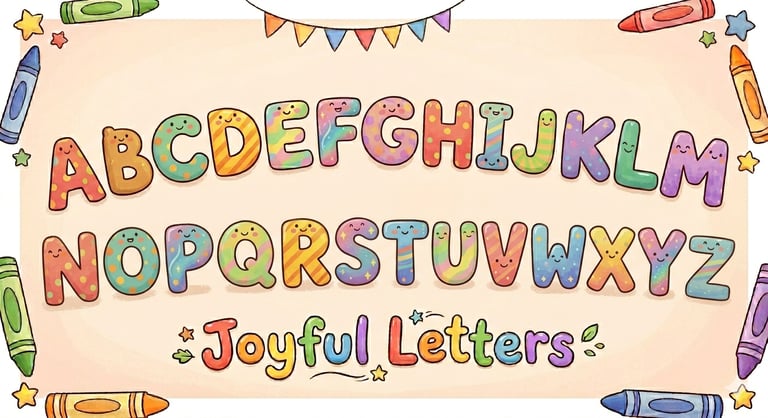
Letter Land:
Alphabet blocks
Letter magnets
Letter puzzles
Alphabet books.
Letter flashcards.
Letter stencils.
Playdough and letter molds.
Sand tray for letter formation.
Letter-themed games.
Letter charts.
Why did we name our site Joyful Letters? For a preschooler, learning letters is like being handed a secret key to a world that was previously locked. There is a profound sense of joy and empowerment when those mysterious "squiggles" on a page suddenly transform into meaningful symbols. We love to see the joy that children feel when they start to understand letters.
It begins with the magic of identity; a child’s eyes light up when they first recognize the letter that starts their own name—it is a "victory of the self" that connects them to the written world. As they master more sounds, that joy evolves into independence. They no longer have to ask what a sign says or what a book title is; they are becoming "big kids" who can decipher the environment around them. This journey from curiosity to confidence creates a deep, intrinsic love for storytelling and communication, turning the hard work of literacy into a playful, lifelong adventure.
Learning letters is an essential part of preschool education, laying the foundation for reading and writing skills that will be built upon in later years. Engaging preschoolers in various fun and interactive activities can help them familiarize themselves with the alphabet.
Items to gather to create an exciting and engaging "Letter Land" center that will jumpstart your preschoolers' interest in letters and early literacy!
Letter magnets
Alphabet blocks
Letter puzzles
Alphabet books.
Letter flashcards.
Letter stencils.
Playdough and letter molds.
Sand tray for letter formation.
Letter-themed games.
Letter charts.
Let's create Here are several effective ways that preschoolers can learn their letters:
1. Alphabet Songs and Rhymes: Utilizing catchy tunes and rhymes is an excellent way for children to memorize the alphabet. Singing songs like the classic "ABC song" helps them recognize letters in sequence. Creating variations with different melodies can also keep the learning experience exciting.
2. Letter Crafts: Crafting activities allow children to get hands-on experience with letters. For instance, they can create letters out of playdough, cut out shapes from colored paper, or use finger paints to make letters on large paper. These tactile experiences reinforce letter formation and recognition.
3.Read alphabet books aloud to children. Encourage them to point to and name the letters. Provide a selection of age-appropriate alphabet books (board books, picture books). Create a cozy reading nook with comfortable seating (pillows, beanbags).
4. Letter Scavenger Hunts: Turning letter recognition into a game can increase a child's enthusiasm for learning. Conducting a letter scavenger hunt in the classroom or at home encourages children to find objects beginning with specific letters. For example, they can search for an apple for the letter A, a ball for B, etc. This hands-on activity motivates them to observe their environment and reinforces the connection between letters and sounds.
Hide letters around the room, and have the children find them.
Hide objects that begin with specific letters around the center. Lop
Provide clues and magnifying glasses for children to find them.
Create a "letter treasure hunt" with a map and letter-based clues.
5. Alphabet Puzzles and Games: Educational puzzles and games that focus on the alphabet can make learning fun. For example, it can involve matching uppercase and lowercase letters, completing puzzles where letters must be arranged in order, or playing games like 'Alphabet Bingo.' These activities can be both entertaining and skill-building.
Provide alphabet puzzles (matching uppercase and lowercase letters, letter sounds, etc.).
Place them on a shelf or in a puzzle rack.
6. Multi-sensory Letter Learning: Incorporating multi-sensory approaches—such as using sandpaper letters for tracing, or writing letters in sand—offers children various methods to engage with letters. These activities appeal to different learning styles, ensuring that every child has the opportunity to thrive. Create sensory bins with various materials that relate to letters (e.g., sand with letter molds, rice with letter beads, playdough with letter cookie cutters), letter-shaped objects or materials.
Create tactile letter cards with different textures using materials like sandpaper, felt, or yarn.
Provide materials like pipe cleaners, popsicle sticks, and building blocks for children to create letter shapes.
Have children work together to build large letter structures.
Letter Tracing Board Coogam Wooden Letters Practicing Board, Double-Sided Alphabet Tracing Tool
Helps to promote fine motor control and hand-eye coordination as well as handwriting.
7. Using Technology Wisely: Screen time can be beneficial when it includes educational games and apps designed to teach letters. Plenty of interactive programs are available that engage preschoolers through animated characters and rewarding experiences for completing letter-related activities. However, it’s important to limit screen time and ensure the use of high-quality content.
Technology Integration:
Use alphabet apps or websites on a tablet or computer that feature letter sounds, shapes, and interactive games.
Use tablets or computers to create digital letter art and animations.
Use interactive whiteboards or projectors to display letter-themed videos and play educational games.
Record the children speaking the letter sounds: Then play the recordings back.
8. Creating an Alphabet Wall: Decorate a part of the classroom or home with an alphabet wall. Hang brightly colored letters with pictures or objects that start with those letters. Children can interact with the wall by contributing objects or pictures for each letter, reinforcing their learning.
Transform the center into a whimsical "Letter Land" with letter-shaped cutouts, banners, and wall decals.
Create a "letter garden" with flowers made from letter shapes.
Create a large mural of "Letter Land" and have children add their own letter artwork and creations. Encourage them to find words that begin with the letter and draw pictures of those words.
Create a colorful alphabet display on the wall.
Display children's letter artwork.
9. Incorporate Movement:
Physical activities that associate actions with letters can help anchor the knowledge in children’s minds. For instance, when teaching the letter ‘B,’ you could have them bounce a ball or ‘jump’ like a frog for the letter ‘F.’ This kinesthetic learning taps into their natural energy and aids retention.
Have children act out letter shapes with their bodies.
11. Alphabet Blocks:
Provide a variety of alphabet blocks (wooden, plastic, soft).
Place them in a large bin or basket for easy access.
12. Letter Magnets:
Provide magnetic letters in different colors and sizes.
Use a magnetic board or whiteboard for children to arrange the letters.
Supervise children closely, especially when using small items. Be mindful of small parts (letter magnets) that could be choking hazards.
13. Letter Recognition:
Encourage children to identify and name the letters on the blocks, magnets, and puzzles.
Play "I Spy" with letters in books or around the room.
Take children on letter scavenger hunts in the neighborhood, looking for letters on signs and buildings.
14. Letter Sounds:
Introduce the sounds that letters make.
Say the sound of a letter and have children find the corresponding letter.
Use alphabet books to reinforce letter sounds.
Create a "sound matching" game using recordings of letter sounds and pictures of objects.
15. Letter Formation:
Have children practice forming letters with playdough, in the sand tray, or with stencils.
Use letter formation rhymes or songs.
Encourage children to use the letter magnets or blocks to build simple words.
Start with their names or familiar words.
16. Alphabetical Order:
Introduce the concept of alphabetical order.
Have children arrange the letter magnets or blocks in alphabetical order.
17. Letter Matching Games:
Create matching games with uppercase and lowercase letters.
Match letters to pictures of objects that begin with that lette
18. Letter-Themed Music: Play alphabet songs and rhymes.
19. Letter of the Week:
Focus on a different letter each week, and make all of the center activities revolve around that letter.
21. Letter Soundscape:
Play alphabet songs and rhymes, but also incorporate sound effects that relate to letter sounds (e.g., a buzzing sound for "b," a hissing sound for "s").
"Letter Storytelling" Activities:
Use letter cards or objects to create story prompts.
Encourage children to create stories that incorporate the letters and their sounds.
Have the children create their own alphabet book.
23. "Mystery Letter" Games:
Hide a letter under a cloth or in a box.
Give clues about the letter's sound and shape.
Have children guess the mystery letter.
24. Create a letter-themed obstacle course with activities that relate to letter sounds and shapes.
You can print these prompts or read them aloud as the children approach each station. They are designed to be rhythmic and easy to remember.
Station 1: The S-S-Snake Slither
"Look at the ground where the line winds around! Can you slither and slide like a snake? Make a long Sss sound as you wiggle from side to side!"
Station 2: The B-B-Balance Bridge
"Don’t fall in the water! Keep your toes on the bridge. Every time you take a step, give your lips a little pop and say: B-B-B-Bridge!"
Station 3: The J-J-Jumping Jack
"There are giant lily pads on the floor! Use your big muscles to leap. With every hop, shout it out loud: J-J-Jump!"
Station 4: The T-T-Ticking Tunnel
"It’s time to go underground. Crawl through the tunnel like a quiet little mouse. Keep the beat with your tongue: T-T-T-T-T."
Station 5: The R-R-Rocket Reach
"You made it to the end! Reach for the stars as high as you can. Can you make your engine roar like a rocket? Rrrrrrr-Blast off!
Tactile Textures: Tape sandpaper letters to the floor at each station. Before starting the movement, have the child "trace" the letter shape with their two "pointer" fingers.
The Sound Basket: At the very end of the course, place a basket filled with objects (a Ball, a Toy car, a Sock). Ask the child to pick one object and run it back to the station that matches its starting sound.
Chalk Shapes: If you are playing outside, draw giant versions of the letters on the pavement and have the children "drive" their bodies along the lines of the letter shapes.
Pro Tip: Always make sure that all toys and materials are safe and age-appropriate.
By using creative activities, songs, games, and multi-sensory experiences, parents and educators can encourage a love for letters that will serve children well beyond their preschool years. The goal is to make learning enjoyable, in an environment where curiosity leads to discovery and knowledge.