Grown-Up Goals. Kid-Sized Joy.
Learning in disguise.
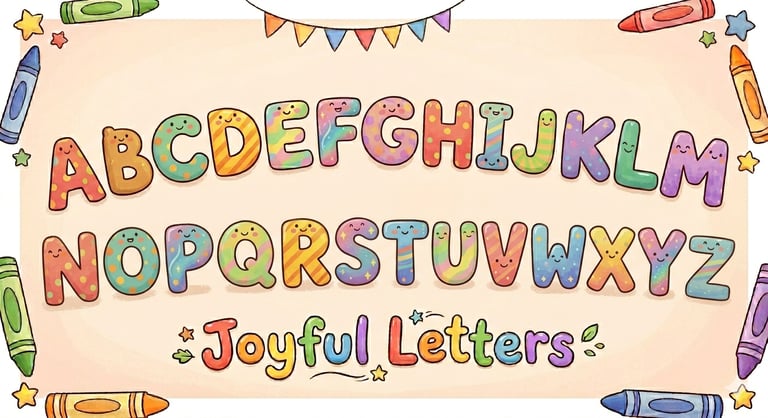
Kindergarten Readiness Assessment
Kindergarten Readiness Assessment
Required Materials
Tools: Paper, pencil, thick marker, child-safe scissors.
Physical Play: One large bouncing ball, one small ball (like a tennis ball).
Manipulatives: 10–12 blocks, an analog clock, and a variety of coins (pennies, nickels, dimes) colored paper or objects in these colors: pink, green, red, black, purple, white, orange, yellow, brown, gray, blue.
Section 1: Social, Emotional & Verbal Skills
Identity: What is your first and last name?
Age: How old are you?
Self-Regulation: Does the child wait for a turn to speak without interrupting?
Group Dynamics: Can the child follow instructions given to a group (e.g., "Everyone stand up")?
Directives: Can the child follow two-step directions (e.g., "Please pick up the block and put it on the table")?
Independence: Can the child put on their own coat or shoes independently?
Section 2: Motor Skills & Coordination
Gross Motor (Rolling): Sit 4 feet apart and roll a large bouncing ball back and forth.
Gross Motor (Bouncing): Stand 4 feet apart and bounce the large ball to one another.
Gross Motor (Underhand): Have the child throw a small ball to you underhand.
Gross Motor (Overhand): Have the child throw a small ball to you overhand.
Fine Motor (Cutting): Draw a wavy line with a thick marker. Have the child cut along the line as accurately as possible.
Fine Motor (Art): Provide paper and a pencil. Say: “Please draw a picture of yourself.” (Look for at least 3 body parts: head, body, arms/legs).
Section 3: Academic Foundations
Literacy (Writing): Say: “Please write your first name on your paper.” (Check for legibility and grip).
Literacy (Letter Recognition): Point to these letters and have the child name them:
Z D F N V M B X I G Q A H
W E R T Y U O S P C L J K
Read the following lowercase letters in the order they are shown.
a f l s p q v n k u j b g m
w y d l x t i r c e z o u h
16. What sound does each of the following letters make?
A B C D E F G H I J K L M
N O P Q R S T U V W X Y Z
17. Explain rhyming words and give some examples of words that have some of the same sounds. Read the following words aloud to the child, then ask: Which words rhyme?
rat cat dog rabbit happy jump same name